TxDOT in Brazoria County: SH 332

SH 332 in Brazoria County is soon to be improved by TxDOT. The roadway project is 5.3 miles in length and spans from FM 521 to SH 288. The project includes three major improvements. The first improvement will occur at the stretch of the road from FM 521 to FM 2004 and will include the reconstruction and widening of the roadway from two to four lanes. The second major improvement targets SH 332 from FM 2004 to SH 288. This section of the road will be widened from four to six lanes. The third major improvement will be the reconstruction of the bridge over Buffalo Camp Bayou. The project also includes some minimal improvements, namely the construction of sidewalks and a new drainage channel.

TxDOT is in the final stages of their plans for SH 332. The final Environmental Assessment and Finding of No Significant Impact (FONSI) were released in the fall of 2020. The next step for the project will be the acquisition of right-of-way. The project would require approximately 70.4 acres of additional right-of-way. After right-of-way acquisition, TxDOT will start construction.

TxDOT in Dallas County: I-35 East (Phase II)

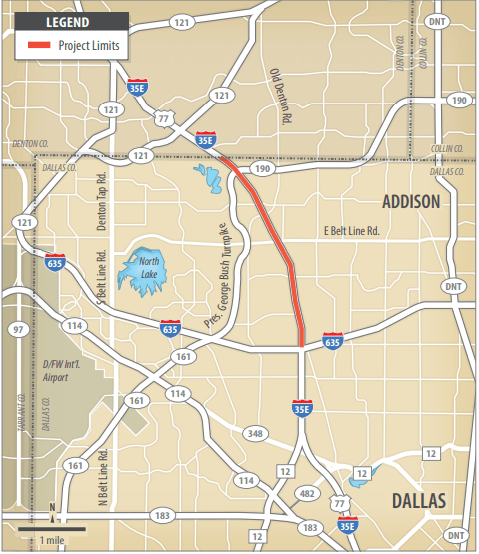
Since the late 1990s, TxDOT has been planning the improvement of the I-35E corridor in Dallas and Denton counties. In 2018, the first phase of the I-35E project was completed. Now, TxDOT is looking to complete the I-35E project with Phase II. These improvements are a part of a statewide strategic plan, the Texas Clear Lanes project, which aims to provide congestion relief in the five largest metro areas in the state.

The I-35E Phase II project will impact the segment of I-35E from I-635 to the Denton County line. The Phase II project will reconstruct and widen the road from six to eight lanes. Additionally, the project will improve intersections and reconstruct the two existing managed toll lanes. According to a project fact sheet, the project has $75 million allocated to acquiring Right of Way (ROW). TxDOT anticipates that construction on the project will begin in late 2021, but before then, it is likely that TxDOT will need to acquire additional ROW from Dallas County landowners.

TxDOT in Hidalgo County: Nolana Loop

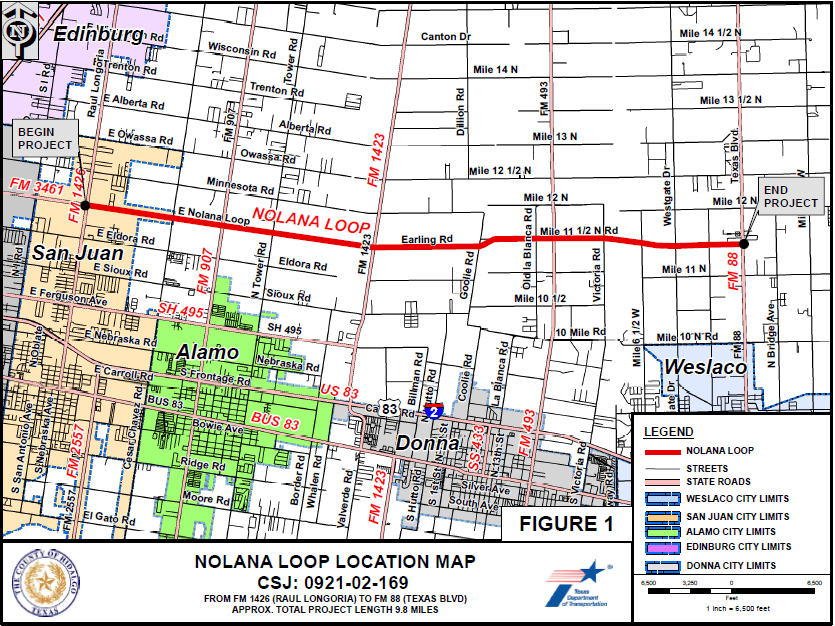
TxDOT and Hidalgo County are working together to make improvements to Nolana Loop in order to improve mobility and accommodate current and future traffic flow. Improvements will be made to the stretch of Nolana Loop that spans from FM 1426 (Raul Longoria Road) to FM 88 (Texas Avenue). The project is 9.8 miles and will widen, reconstruct, and extend the roadway.

In August 2020, the Final Environmental Assessment and the Finding of No Significant Impact (FONSI) were made available for public review. The next step for the project is the acquisition of approximately 82.6 acres of Right of Way (ROW), which is anticipated to force the relocation of several residences and one commercial structure. Once ROW is acquired, the project will begin construction.

TxDOT in Fort Bend County: FM 723 Improvements

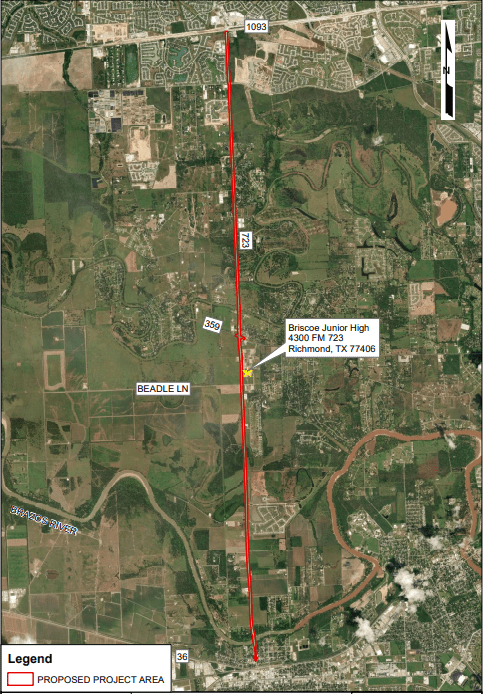
In response to growth in Fort Bend County and in order to meet current design standards, TxDOT is preparing to widen FM 723. The project is 9.23 miles long and stretches from Avenue D to FM 1093. The proposed plans will transform FM 723 from a two lane road to a four lane road. The project requires TxDOT to acquire approximately 100 acres of Right-of-Way (ROW). As of fall 2020, TxDOT has been in the process of acquiring ROW and conducting appraisals on impacted properties. Once ROW is acquired, construction will begin.

A map of project area from a 2018 TxDOT public hearing

TxDOT in Denton County: SL 288

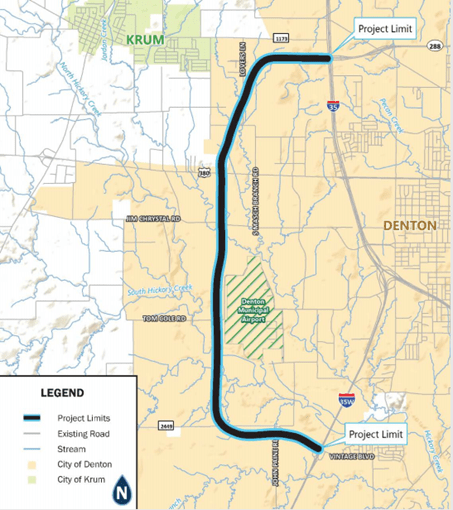
TxDOT is preparing for future population growth in Denton County with their most recent plans to improve State Loop 288. The project extends 9 miles from IH 35 W to IH 35.  The final product of the SL 288 improvements will be a newly located, four-lane frontage road system. Improvements will be completed in two phases. Phase one includes the construction of one frontage road which will be a two-lane, two way street. Phase one also includes securing right of way and constructing a sidewalk and median. In Phase two, there will be construction of another two lane frontage road, and both two-lane frontage roads will become one-way frontage roads. In August 2020, the project’s Final Environmental Assessment was issued by TxDOT for public review. The next step for the project is the acquisition of approximately 414.7 acres of Right of Way.

TxDOT in El Paso: Reimagine I-10

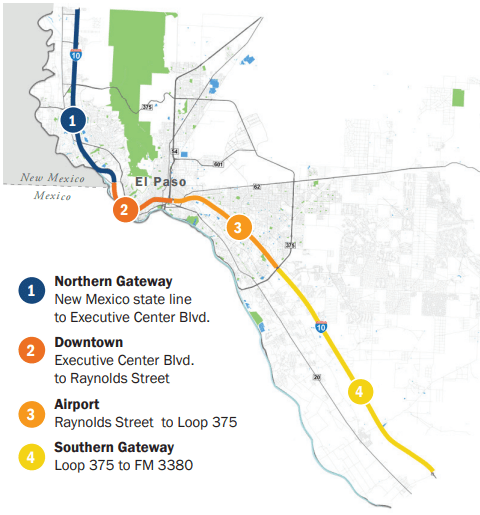
In 2019, TxDOT completed a study analyzing the I-10 El Paso Corridor, which is 55 miles long and extends from the New Mexico state line to FM 3380 (Aguilera International Highway). This stretch of highway is not only accommodating a growing population, but also helps facilitate international trade. The “Reimagine I-10” study identified four segments of the corridor and developed roadway solutions for each. Projects for each segment will be prioritized by TxDOT and will go through preliminary engineering (schematic) and environmental processes accordingly.

At this point in the Reimagine I-10 project, TxDOT has only prioritized improvements to Segment 2 which runs through downtown El Paso. The proposed Downtown I-10 project extends for 5.6 miles from Executive Center Boulevard to Loop 478 (Copia Street). The proposed improvements include reconstruction of the main lines, retaining walls, bridges, ramps, and cross streets. The project is anticipated to get environmental approval by 2024, which would be followed by ROW acquisitions and finally, construction.


The four segments of TxDOT’s Reimagine I-10

Texas Central High-Speed Rail

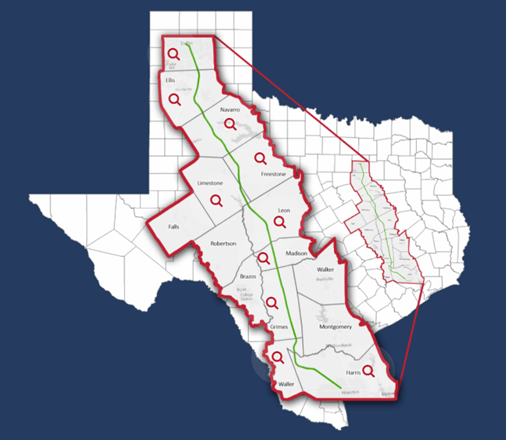
Texas could become home to the nation’s first high-speed rail. Texas Central, a private company funded by foreign investors, is seeking to build a 240-mile, high speed rail connecting Dallas and Houston. The Texas High Speed Rail is modeled after and utilizes the the same technology as the high speed rail in Japan which connects Tokyo to Osaka. Texas Central has been met with strong opposition from some Texas lawmakers and rural landowners. Despite this opposition, the project is moving forward through the regulatory process.

In May of 2020, the Federal Railroad Administration released the Final Environmental Impact Statement for the project. In September 2020, the Federal Railroad Administration released a pre-publication of its final ruling, the Rule of Particular Applicability and Record of Decision, which addresses safety requirements of the project.

Before construction begins, Texas Central still needs to acquire additional right-of-way needed for the project. The high-speed rail will have an unprecedented negative impact on the value of impacted properties. Additionally, the project must still be approved by the Federal Surface Transportation Board before construction can begin.


The proposed route which goes through Dallas, Ellis, Navarro, Limestone, Freestone, Leon, Madison, Grimes, Waller and Harris counties.

County Road 101 in Williamson County

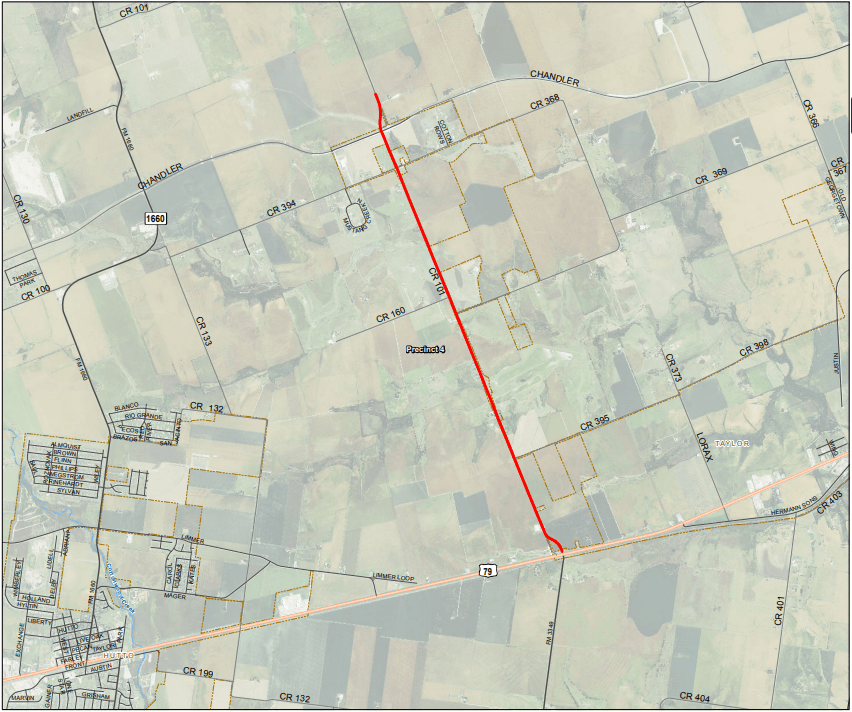
Williamson County and the City of Taylor are reconstructing County Road 101 as a part of the county’s Long Range Transportation Plan which is designed to meet the needs of the county’s growing population. The $13 million project is 3.2 miles in length and spans from US 79 to Chandler Road. CR 101 will be reconstructed with two 12-foot lanes and left turn lanes at the intersections of CR 394/CR368 and Chandler Road. Additionally, the project will include two bridges. Construction is anticipated to be completed in fall of 2021 and the County has already begun the process of acquiring Right of Way.

TxDOT in Denton County: FM 2931

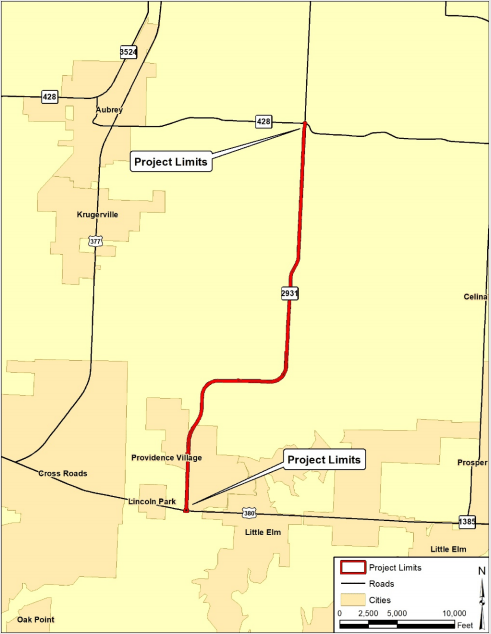
In response to safety concerns and worsening traffic conditions, TxDOT is planning to widen FM 2931 in Denton. The project is approximately 6.37 miles and will span from US 380 (East University Drive) to FM 428 (Spring Hill Road). The first phase of the project will transform the 2-lane road into a 4-lane, urban roadway and will include the construction of a 42-foot-wide raised median. Phase two will transform FM 2931 into a 6-lane roadway and will add a 3rd lane in each direction. 

Approximately 46 acres of new ROW would be required to accommodate the proposed improvements. TxDOT is scheduled to begin Right-of-Way acquisitions in Fall 2021. Before ROW acquisitions can occur, however, TxDOT must still prepare a preliminary design and receive environmental clearance.

TxDOT in Houston: I-45 Improvement Project

The City of Houston is preparing for one of the biggest infrastructure projects in a generation. The project is called the North Houston Improvement Project (NHHIP) and it will reconstruct I-45 from Beltway 8 to Downtown. TxDOT’s goals for the project are to manage congestion, enhance safety and accommodate future growth.

NHHIP is 24 miles in length and will be separated into three segments. Segment 1 will include the widening of the freeway and additional new lanes from IH-610 N Loop and North Sam Houston Tollway. Segment 2 will widen and add new lanes of the portion of I-45 from IH-610 to downtown Houston. Segment 2 will also include a rebuild of the interchange between IH-45 and the IH-610 North Loop. Lastly, Segment 3 includes improvements to the segment of I-45 surrounding downtown Houston. Segment 3 includes the most expensive and all-encompassing improvements, as the entire 12 mile stretch of highway will be rebuilt (including four major interchanges).

The project in its entirety will take over ten years to complete. However, regional planning documents anticipate construction on Segment 3 beginning within the next two years. Segments 1 and 2 will begin construction in five to ten years. TxDOT is currently preparing the Final Environmental Impact Statement, which the public will have the chance to review for 30 days. Following the review period, TxDOT will reach a record of decision and start acquiring Right-of-Way before finally beginning construction.